Stories From the Room · Bradenton, Florida
Built for the game
without the
jacket.
At The Grappling Academy Bradenton, No-Gi is the shared language. Welcome is the first lesson.
Coach Dan Martinez answered The Way OSS’s questions in writing. Biographical details were checked against the academy’s official website. Culture is attributed to Dan’s account; this story does not present unobserved details as firsthand reporting.
A serious room reveals itself in what it asks of the person who knows the most. At The Grappling Academy Bradenton, the experienced student is not excused from the beginner’s development. They are partly responsible for it.
That principle connects nearly everything Coach Dan Martinez says about the academy he has built: why No-Gi became its central language, what a new student should learn first, how competitors and hobbyists share an everyday class, and why an unfamiliar face should not remain unfamiliar for long.
The result is a useful lesson for any martial arts academy. A room does not have to choose between high standards and a generous welcome. When the culture is built deliberately, each can strengthen the other.
One language, studied deeply
No-Gi did not become the academy’s center through a marketing exercise. It began with Dan’s own path. He trained exclusively without the Gi, then watched the discipline’s popularity continue to grow across the United States. The academy formed around the game he knew most intimately and the direction more practitioners were choosing to explore.
That focus matters. No-Gi changes the available grips, the pace of transitions, and the way control is created. A specialist room gets to remain inside those constraints long enough to develop a common vocabulary. Beginners know what they are entering. Competitors know what the room is sharpening. The academy can go deep instead of asking its identity to change with the night of the week.
“No-Gi became the academy’s central language and discipline primarily due to myself having trained exclusively in No-Gi Jiu-Jitsu, as well as the ever-growing popularity of No-Gi Jiu-Jitsu in America.”
— Coach Dan Martinez
Foundation before offense
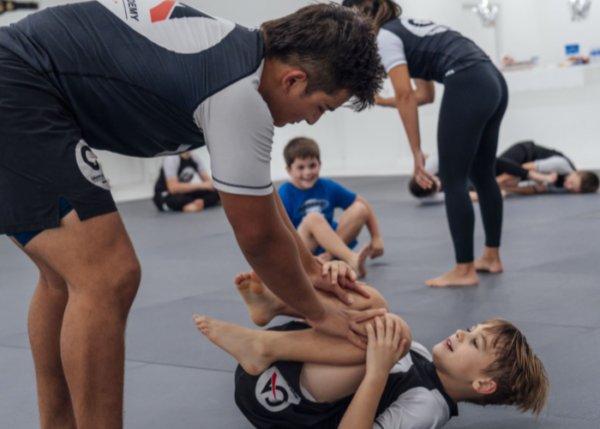
The temptation in the first month of Jiu-Jitsu is to collect attacks. Submissions are memorable. They look like progress. Dan’s first thirty days begin somewhere less glamorous and more durable: understand the major guard positions and learn how to escape from the bottom.
The sequence is revealing. Before a student is asked to impose a game, they learn to recognize where they are. Before they chase offense, they learn how to survive pressure, create space, and return to a position from which choices are possible. Only then does the academy begin adding more attacks in the following thirty days.
This is more than a curriculum decision. It gives the beginner an early form of agency. A person who can orient themselves and escape is less likely to experience every bad position as panic. The first victory is not making someone tap. It is becoming harder to overwhelm.
“Understanding the different guard positions, as well as being able to escape the bottom position, are imperative for a student to have a strong foundation from which to add attacks and more offense.”
— Coach Dan Martinez
One everyday class, different ambitions
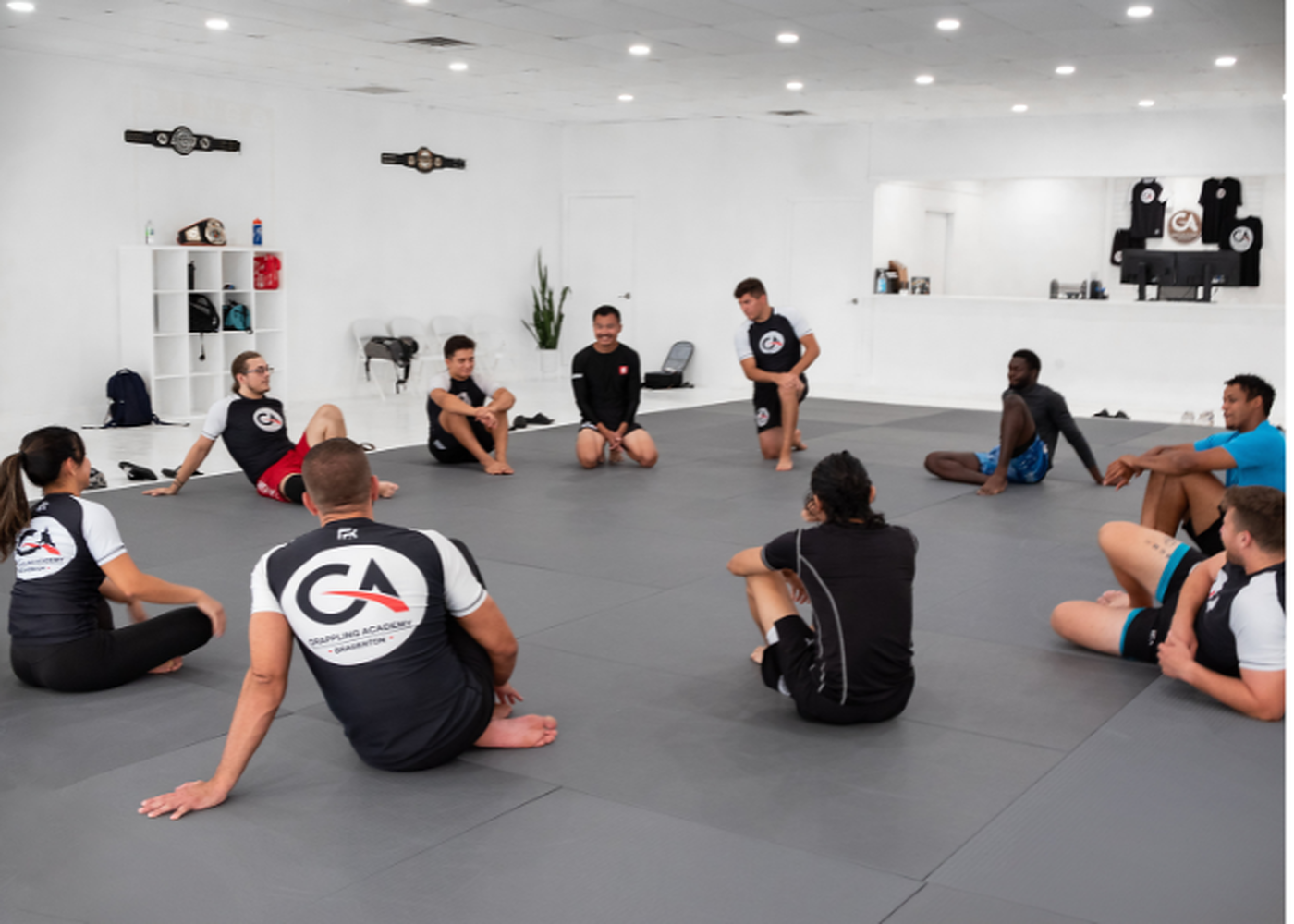
The academy’s official site describes a room that spans beginners and world-class competitors. Dan’s explanation makes the structure behind that promise clearer. The All Levels class belongs to hobbyists and competitors alike. Everyone works alongside everyone, and higher-level partners are expected to help build the less experienced.
That expectation changes what rank means. Experience is not merely permission to seek harder rounds. It carries a teaching responsibility. The newer student receives safer, more informed practice; the experienced student develops the control and attention required to make someone else better.
Competition preparation is treated differently. When athletes need a more specialized pace and purpose, that work moves into a different kind of session rather than taking over the everyday class. The separation protects both aims: competitors can prepare honestly, and the academy’s regular learning environment does not have to become a competition room by default.
“Everyone works alongside everyone, and we have built a culture and understanding where higher-level training partners help build the less experienced.”
— Coach Dan Martinez
The ritual is an introduction
Some academies protect culture with rules posted on a wall. The Grappling Academy’s most important rule is unwritten and almost disarmingly simple: if you do not recognize someone on the mat, introduce yourself.
Dan says the practice applies to visitors and first-time students alike. By the time the warm-up ends, the goal is for every new face to feel that they are already part of the team. The gesture is small enough to repeat without ceremony, which is precisely why it can shape a room. Belonging is not left to personality or chance. It becomes everyone’s job.
For a beginner, that first introduction can matter as much as the first technique. Walking into a martial arts academy means entering a room where nearly everyone appears to know more than you do. Being acknowledged closes some of that distance before training begins.
“If you don’t recognize someone on the mat, you introduce yourself. By the time the warm-up is over, every new face feels welcome and like they’re already a part of the team.”
— Coach Dan Martinez
What Bradenton asked the room to become
The community surrounding an academy eventually tells its teachers what people are truly coming to find. In Bradenton, Dan has learned that the answer extends beyond technique. Students want to be challenged and supported, to build confidence and discipline, and to form genuine friendships with the people beside them.
None of that makes the training less serious. It explains what the seriousness is for. A strong academy does not merely produce better grapplers. It gives people a place to practice staying composed under pressure, returning after difficulty, helping someone with less experience, and discovering that discipline can be shared.
“People are looking for more than just a place to train—they want a community where they can build confidence, develop discipline, and make genuine connections and friendships.”
— Coach Dan Martinez
That is what this room appears to get right: its specialization is technical, but its purpose is human. No-Gi is the common language. Guard and escape form the beginner’s grammar. Experienced students help carry the conversation. And before any of it begins, someone introduces themselves.
From understanding to a first visit
If this sounds like the kind of room you have been looking for, confirm the current schedule and first-class details directly with the academy. The Grappling Academy is located at 9516 Cortez Road West, Unit 3, in Bradenton.
The story builds understanding. The spotlight supports the decision. The app carries the next step.